

AME: Valiant Cuiellette
Age: “““““““““`55
Chapter/City: New Orleans
Years w/BMR: “““5.75
Tell us a little about yourself and how you first found Black Men Run New Orleans. What drew you to the brotherhood?
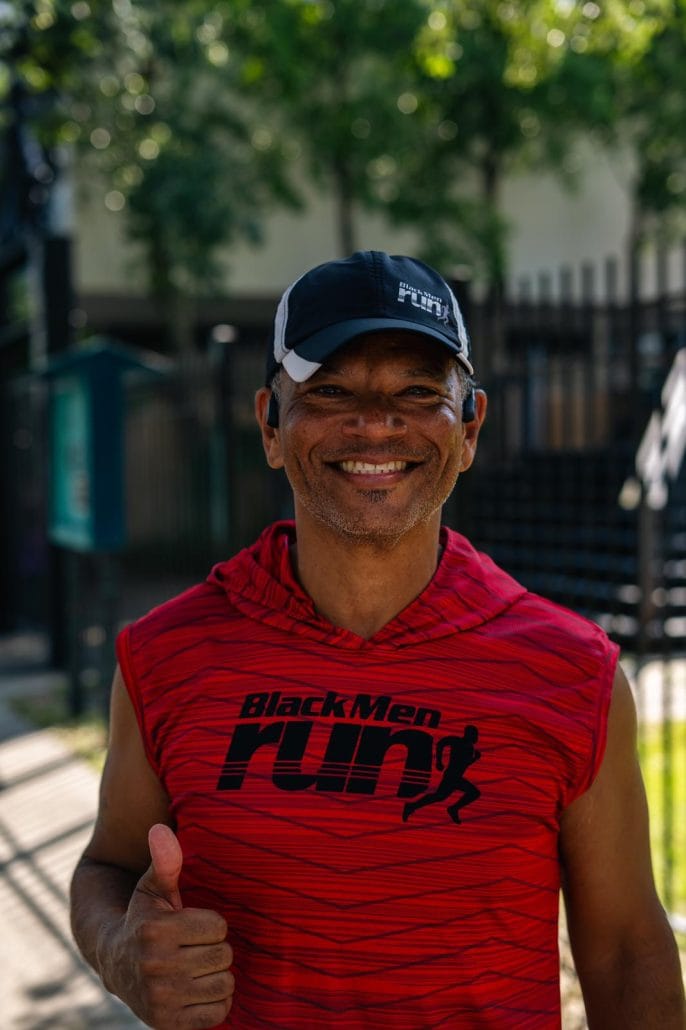
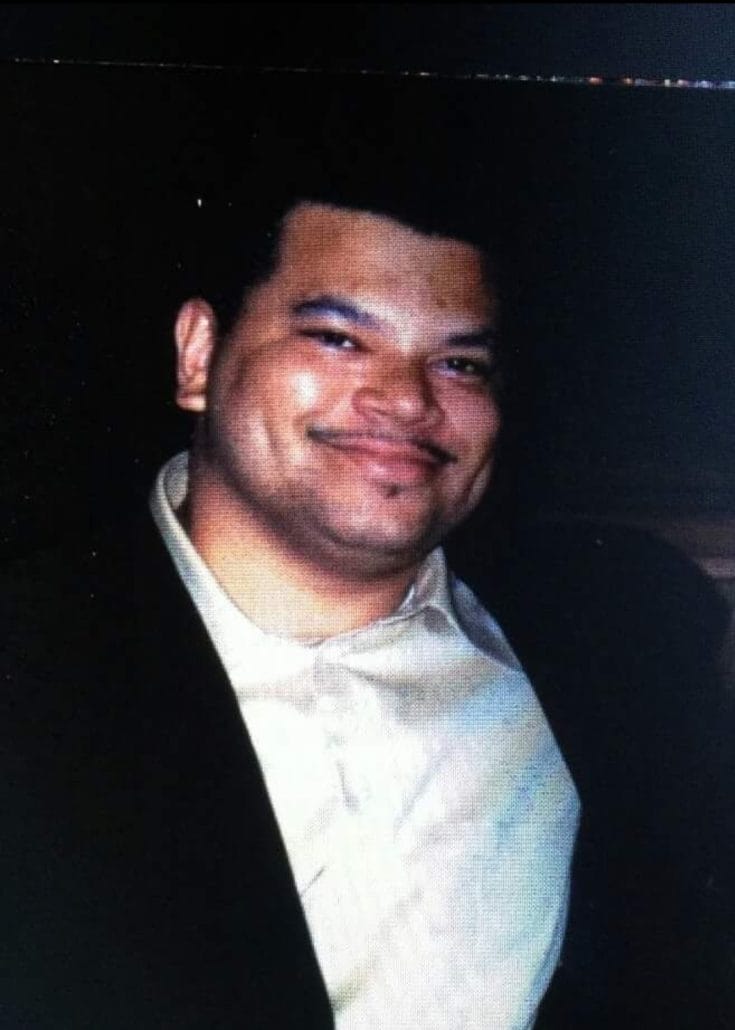
My professional background is hospitality and transportation for over 30 years. I am most excited to be a 55-year-old marathoner. I discovered the brotherhood in 2020 while running during COVID. I was immediately welcomed and found likeminded brothers on the same mission. I was on a journey from being 250 lbs. (see pic) and overcoming a terrible family history. My grandfather, uncle, and father all had either a heart attack, stroke, or aneurysm in their 50s.
Do you have a specific role in BMR NOLA?
I recently became Vice-Captain of the New Orleans chapter. It is a complete honor to officially serve the brotherhood to represent and introduce our mission to the community.
What was your relationship with running before joining BMR, and how has it evolved since becoming part of the chapter?
I ran my first half-marathon in 2014 after losing 35 lbs. It was so painful that I swore to never do it again. The following year, I discovered cross training for next chapter of my fitness journey. In 2016, I became a certified trainer and learned how to dial in my nutrition. I served as a nutritional coach until the pandemic closed gyms in 2020. Since joining BMR, I have run many 5ks, 10ks, and half-marathons. I also ran my first of 8 marathons a year after joining.
How has being part of Black Men Run impacted your physical health, mental well-being, or overall lifestyle?
BMR has made it easy to stay consistently healthy by supporting this lifestyle. Brotherhood and running are a powerful tool for maintaining mental health also. Running in New Orleans comes with its own culture, climate, and rhythm.
What do you love most about running in the city?
New Orleans has some the most beautiful scenery along the Mississippi River, Lake Pontchartrain, and many parks. I especially like watching the sunrise on those early morning summer runs with my brothers.
Can you share a moment, run, or conversation within BMR that really stuck with you or helped you push through a tough time?
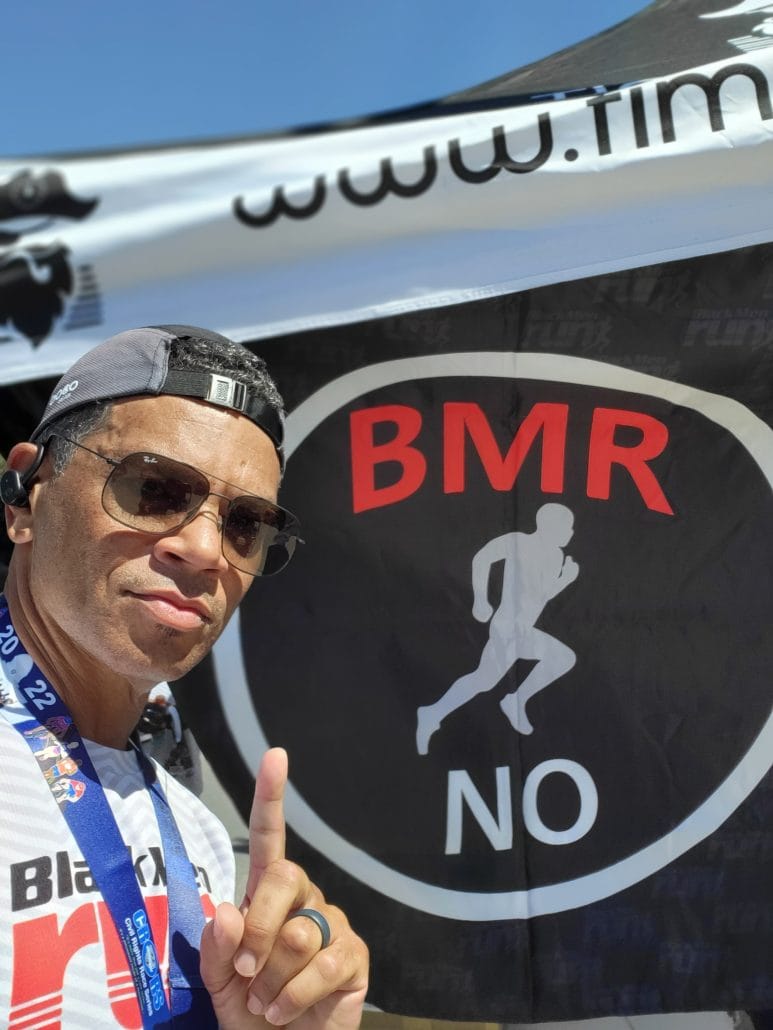
I can recall several conversations with brothers on long runs that encouraged me during hard times in my family. We support each other every chance we get!
What does “brotherhood” mean to you, and how do you experience it within Black Men Run New Orleans?
Brotherhood means showing up for teammates even when it’s not easy or convenient. We show up for each other!
Outside of running, what are you passionate about—career, family, creativity, or community work—that people may not know about you?
My passion outside of running is serving senior citizens and young brothers. I provide transportation to doctors’ appointments and deliver healthy food choices to those in need. I have also mentored young men through a local program called Son of Saint.
What challenges have you faced on your running or wellness journey, and how did you work through them?
Last September I faced my first setback in 5 years. A work-related injury took me away from training for a couple of months. It was very humbling and gave me the opportunity to be a spectator. Cheering for my brothers was blast! I strongly suggest just showing up sometimes to support the team.
If a Black man in New Orleans is on the fence about joining BMR, what would you tell him about why it’s worth showing up?
The support of the brotherhood is the key to getting started. We have brothers in their 70s coming out to power walk. All paces and levels are welcomed. We also practice ‘no man left behind.’ “You will never be alone!”
What’s next for you—any running goals, personal milestones, or ways you hope to continue giving back to the brotherhood?
I will be running the New Ultra 50k in October (my second) and the Charlotte half or full in November.
Name: Isael (Cory) McCall
Age: 42
Chapter: Seattle
Years w/ BMR: 6
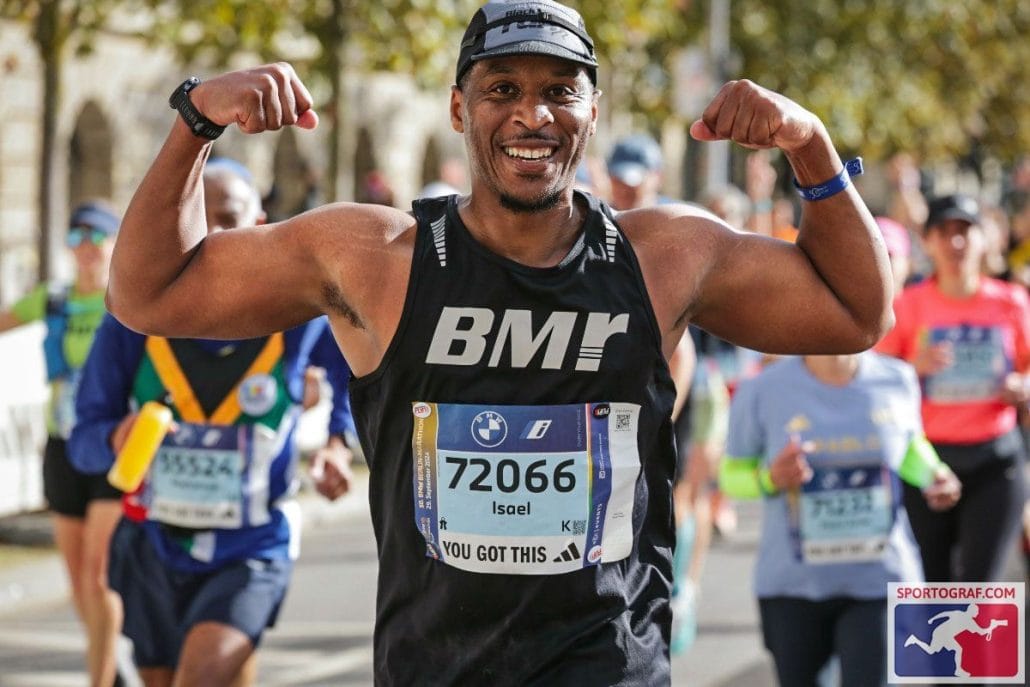
· What originally drew you to Black Men Run, and what motivated you to step into a leadership role with the Seattle chapter?
I was originally drawn to Black Men Run because of their presence. When I first saw the group, I saw men who reminded me of my father, my uncles, and my cousins—men who looked like me, leading other Black men on a journey toward better health. There was something powerful and grounding about that. It wasn’t just about running; it was about community, representation, and seeing Black men take ownership of their physical and mental well‑being.
What motivated me to step into a leadership role was the opportunity to help strengthen and expand that impact. (Plus CMO asked me. Lol) I wanted to help create a space where Black men could show up authentically, challenge themselves, support one another, and build habits that extend far beyond the miles we run. Leadership felt like the natural next step—not for recognition, but to help carry forward a mission that had already given me so much.
· During your time as Vice-Captain, what leadership lesson had the biggest impact on how you showed up for the brothers in your chapter?
Wow, where do I start? As a former Army enlisted man and later a warrant officer, I’m no stranger to being in charge. But stepping into leadership within Black Men Run taught me something the military never quite could: that presence matters more than perfection.
In the Army, leadership is often about precision, decisiveness, and getting the mission done. But in BMR, the “mission” looks different. It’s emotional. It’s personal. It’s community-based. I realized early on that the brothers didn’t need me to lead from a position of authority—they needed me to lead from a place of authenticity.
The biggest lesson was understanding the power of simply showing up. Some brothers didn’t come out for the miles; they came out to be seen, to feel supported, or to get through a tough week. That meant my job wasn’t to command—it was to connect. It meant listening more deeply, checking in more intentionally, and creating a space where every man felt valued and welcomed.
That shift—from directive leadership to empathetic leadership—changed everything about how I showed up. It reminded me that consistency, compassion, and genuine presence can have a bigger impact than any perfectly executed plan. In this role, leadership wasn’t about rank; it was about relationships.
· What moments or experiences best capture what the Seattle chapter meant to you personally?
There are so many, but the moment that stands out the most is when BMR Seattle hosted a national meet‑up. I wasn’t a Vice‑Captain yet, but I was involved in a lot of the behind‑the‑scenes work. Seeing brothers travel from all over the country just to be in community, uplift one another, and share space together was truly inspiring. I don’t think I had ever been around that many Black men in my life at a running event—let alone watching all of us take on a half marathon on Mt. Rainier. If you say it out loud, it almost sounds unreal: dozens of Black men gathered at the base of one of the most iconic mountains in the Pacific Northwest, not for a party or a conference, but to run, to connect, and to pour into one another. But it really happened, and being part of that moment changed me.
That experience captured the true essence of what the Seattle chapter meant to me: brotherhood, purpose, and the power of showing up for each other in ways that go far beyond the miles.
· How did balancing leadership responsibilities with your own running and personal life shape your approach to self-care and sustainability?
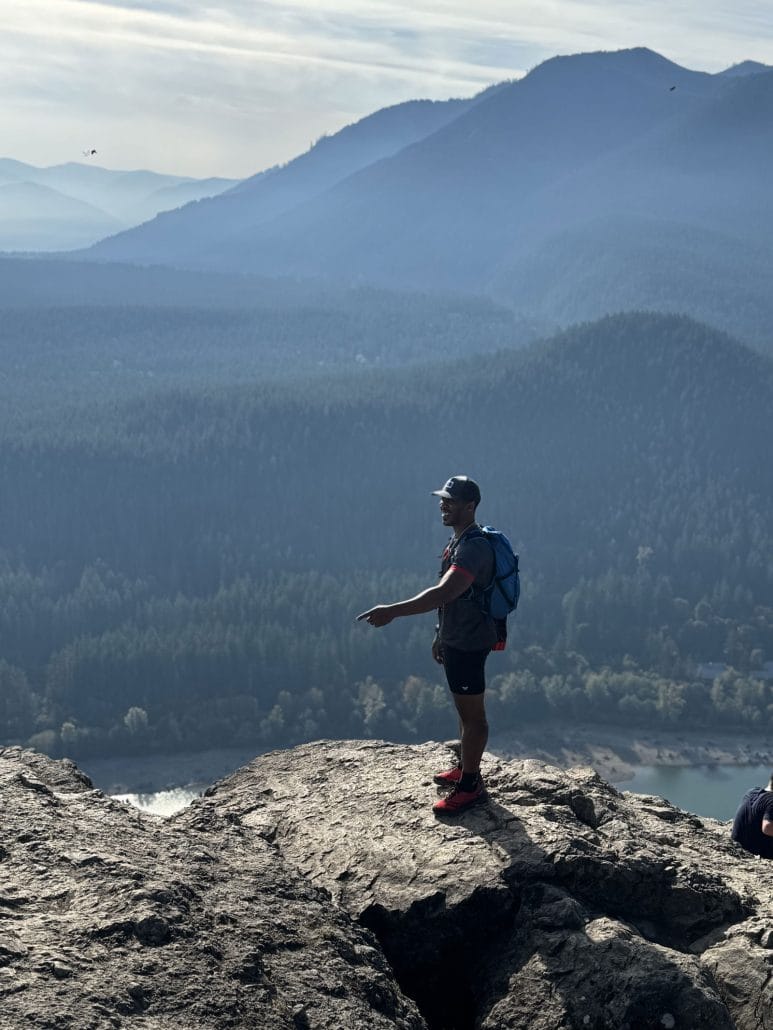
As a single father, I’ve learned that boundaries and self‑care aren’t optional—they’re essential. There were weeks when I couldn’t make it to group runs because my son came first, and I never apologized for that. But even when I couldn’t be there physically, I stayed accountable to myself. On the weeks I missed group runs, I found time to run on my own, or I connected with nearby run clubs so I could still move my body and stay in community.
That rhythm taught me something important: leadership doesn’t mean sacrificing yourself. It means knowing when to step forward and when to step back. I realized that to truly support and pour into others, I had to make sure I was showing up for myself first—mentally, physically, and emotionally.
Balancing fatherhood, running, and leadership reshaped my view of sustainability. It taught me that self-care isn’t a luxury; it’s part of the job.
· Looking back, what are you most proud of from your time serving the Seattle chapter?
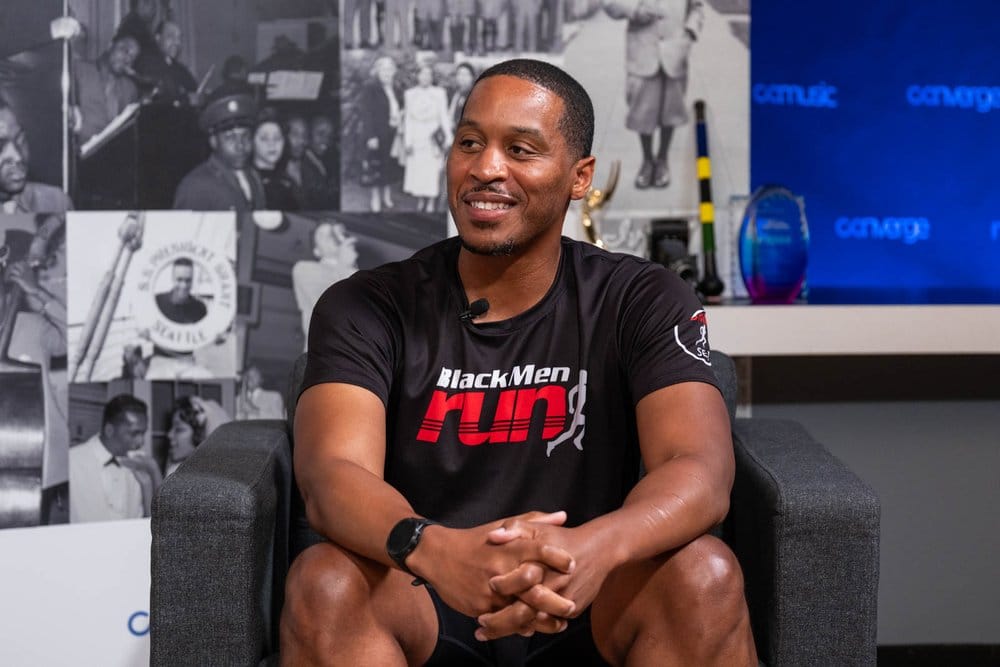
Without question, I’m most proud of witnessing Brother Les’s journey. Every time he shares his testimony, I can’t help but smile. He’s the eldest member of our chapter and has been running with us since the very beginning. To watch his progression—from his first 10K, to his first half marathon, to surviving a heart attack, to eventually hearing his doctor take him off medications—has been nothing short of incredible.
What moves me most is that he always says Black Men Run saved his life. And while that means a lot, what makes me smile even bigger is knowing he put in the work. We just gave him the community, the support, and the brotherhood to help him keep going. Seeing a Black man prioritize his health, push past barriers, and enjoy the fruits of his labor—while being surrounded by brothers cheering him on—captures everything I’m proud of from my time with the Seattle chapter.
Moments like that remind me why this movement matters.
· How did being part of BMR influence your perspective on community, accountability, and brotherhood?
Being part of BMR taught me that community requires effort and intentionality. When I first moved to Seattle, I realized I didn’t really have a community of my own—so I had to create one. BMR became that space for me, but it also showed me that community isn’t something you just join; it’s something you build, contribute to, and protect.
Wearing the BMR logo carries weight. People know who we are, and I take pride in representing the organization well. That sense of visibility naturally builds accountability—not just for me, but for how we show up as a collective. If one brother is perceived a certain way, it reflects on all of us. That awareness made me more intentional about my actions and more committed to holding the brotherhood to a high standard.
I also learned that “community” doesn’t look the same for everyone. Some folks want a deep connection and shared responsibility. Others want to benefit from the community without contributing or being accountable. As a leader, I had to develop discernment—an understanding of how to support everyone while still moving the brotherhood and the mission forward.
BMR strengthened my belief that brotherhood is built on shared effort, mutual accountability, and the willingness to show up—not just for the miles, but for each other.
· What challenges did you face as a leader, and how did those moments help you grow beyond running?
This is a tough one. I wouldn’t necessarily call them “challenges,” but there were definitely situations I hadn’t encountered before. Whether it was collaborating with other run clubs, navigating relationships with corporate sponsors, or managing expectations from people outside the organization, I had to quickly learn how to prioritize the mission of the brotherhood above everything else.
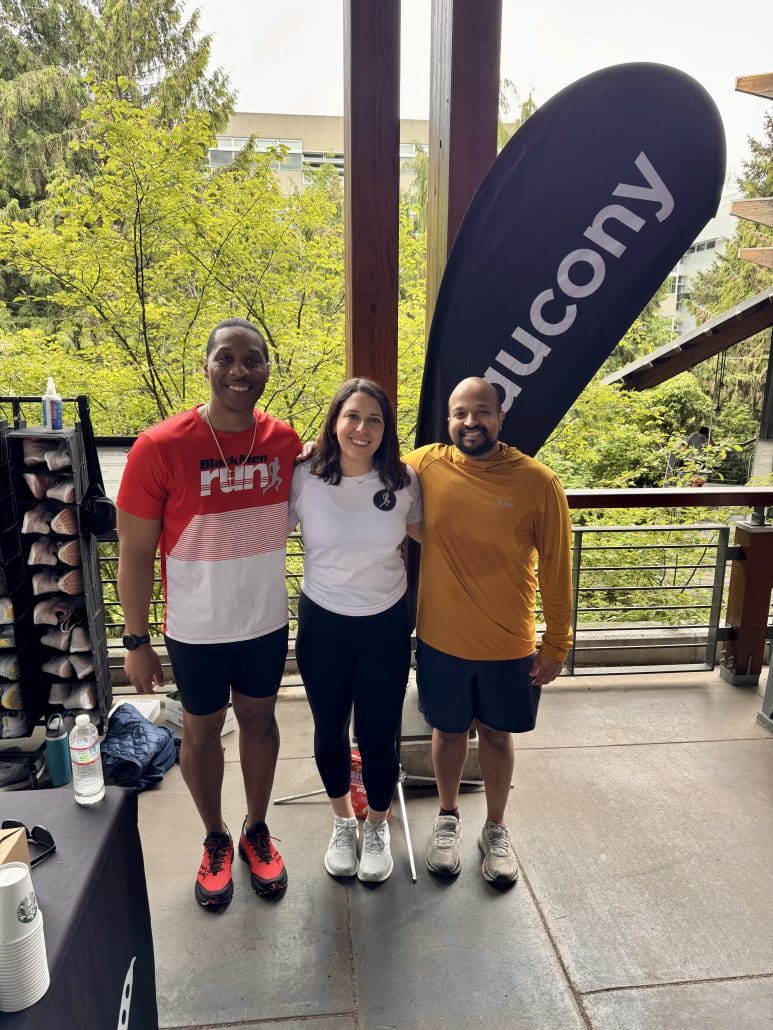
One of the biggest lessons was learning how to decipher between people who genuinely wanted to support the movement and those who were more interested in clout or self‑serving opportunities. That required patience, discernment, and a willingness to stand firm in what BMR represents.
Those moments helped me grow far beyond running. I learned how to stay patient under pressure, how to be firm but tactful in my communication, and how to lead with integrity even when the situation felt uncomfortable. Most importantly, it taught me that leadership is service. You’re not there for shine—you’re there to protect the mission, elevate the brothers, and make decisions that move the community forward
· Since stepping away from the Vice-Captain role, how has your relationship with running and fitness evolved?
Not much has changed—I still run regularly, and I’ve continued my 5 AM strength‑training sessions because that routine keeps me grounded. Stepping away from the Vice‑Captain role didn’t pull me away from the lifestyle; if anything, it allowed me to reconnect with running purely for myself.
I’ve also stayed intentional about setting goals. I’ve got two races on the calendar this year: the BMR Seattle Trail Fest 27K and the BMR National Meet‑Up in Charlotte. Training for those keeps me focused and gives me something to look forward to. So even though I’m no longer in a leadership position, running and fitness are still core parts of who I am—they’ve just shifted into a space where I can enjoy them at my own pace and on my own terms.
· What advice would you give to current or future BMR leaders about serving with purpose while staying true to themselves?
The late Nipsey Hussle said, “The highest human act is to inspire.” I carry that with me, and it’s the same message I’d give to any current or future BMR leader: just show up and be yourself.
You never know who’s watching, who’s listening, or who needs the encouragement that comes simply from seeing you be authentic. People can feel genuine energy—and they can spot a phony from a mile away. Leadership isn’t about putting on a persona or trying to win people over. Don’t worry about being liked; the right people will find you and connect with you for who you truly are.
Serve with intention. Be kind. Respect others. Hold yourself accountable. And most importantly, stay grounded in who you are. If you do that, everything else will fall into place, and your leadership will have a lasting impact on the brotherhood and the movement.
· When you think about your legacy within Black Men Run, what do you hope people remember most about your time and impact?
I’m still writing my legacy with the brotherhood. This journey isn’t over for me—not even close. But if there’s one thing I hope people remember, it’s that I showed up with authenticity, heart, and the intention to make the brotherhood a little stronger than I found it.
I hope they remember the energy I brought, the support I offered, the accountability I held myself to, and the care I showed for the mission. And honestly? When I leave this earth, I’m pretty sure there’ll be a BMR shirt on my casket—because this movement is woven into who I am.
More than miles or titles, I want my legacy to reflect how I made people feel: seen, welcomed, inspired, and part of something bigger than themselves.
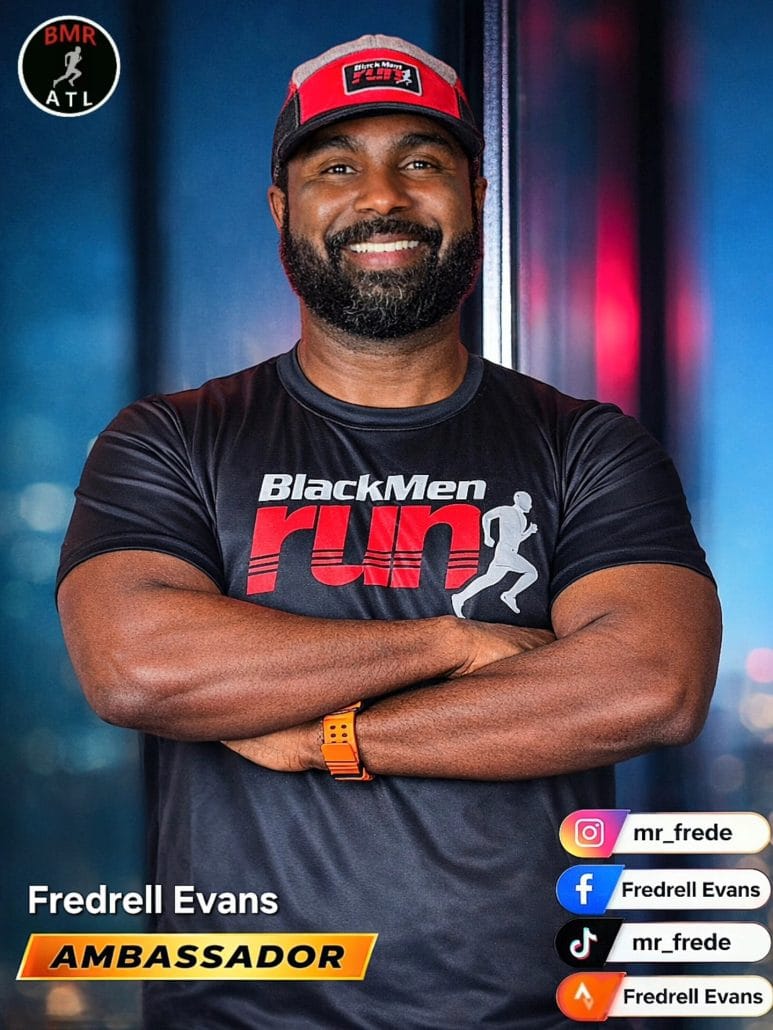
NAME: Fredrell (Fred) Evans
Age: 42
Chapter/City: Atlanta
Years w/ BMR: 1 year (Feb 2025)
1. What started your running journey?
If you’d asked me as a teen, I would’ve never thought running would be something I’d enjoy as an adult. My running journey started as a way to be more active and offset some unhealthy eating habits. I completed my first 5K in January 2013, and that started what has become something I’ve genuinely grown to love.
2. How far have you travelled to do a race, and what was it?
In 2014, I traveled to Chicago to run the Chicago Spring Half Marathon—my first time traveling out of state for a race. In 2015, I visited Philadelphia to run the Philly Love Run Half Marathon.
3. What has been your biggest challenge as a runner, and how did you overcome it?
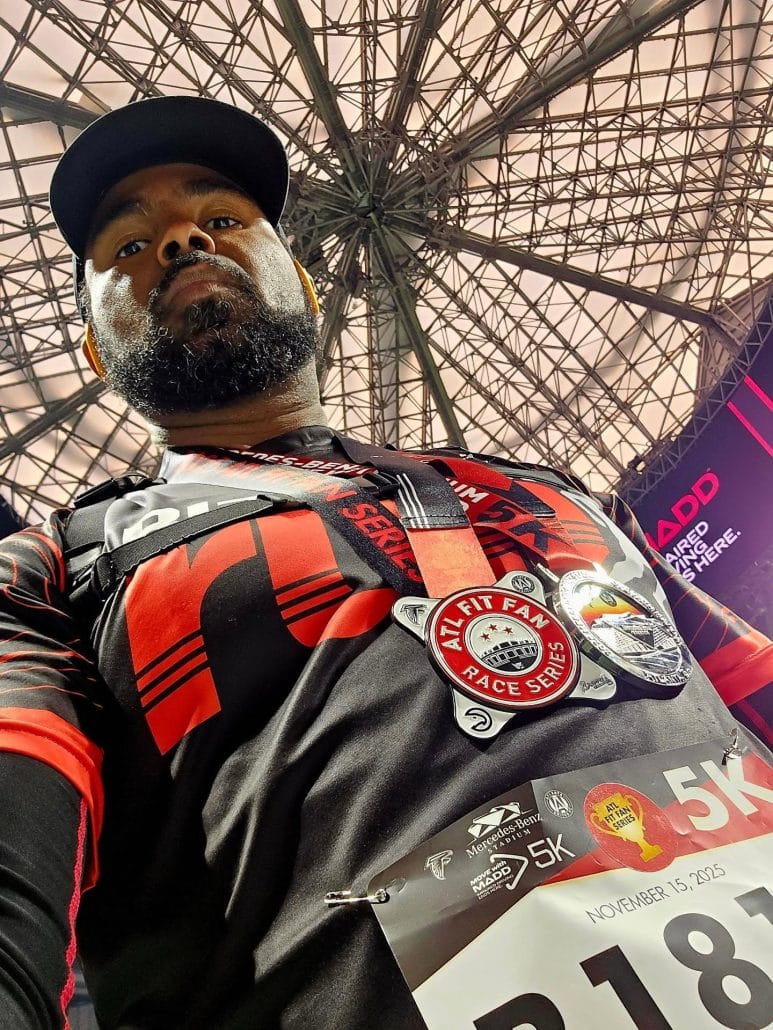
In late 2024, I began training for my first full marathon (2025 Publix Atlanta Marathon). In any training plan, the miles keep increasing whether you’re ready or not. I didn’t anticipate needing additional time and support to break through some running plateaus. Most of my runs were solo, and that didn’t work for me long-term. I learned that I need the support of running with others—especially on long run days—to get that extra push and make it through.
4. Funniest thing to happen to you during a race?
I don’t really have any funny race moments, but I’ve definitely had a couple of unexpected falls while running. The most recent was just before the 2026 Polar Opposite. I went out with a friend for a Saturday long run from Piedmont Park to Lenox Mall and back—a 13-mile day. Not even one mile in, I tripped and fell forward, rolling to brace my fall while the water bottle I was holding went in the opposite direction. Thankfully, no harm was done. After a few seconds on the ground, I laughed it off, got up, and kept going.
5. What’s something without which you cannot run?
Music. I’ve gone back home without it. Music helps me zone out and serves as white noise for all my inner thoughts and self-coaching during a run. Without it, I feel tired sooner and mentally exhausted.
6. What keeps you motivated?
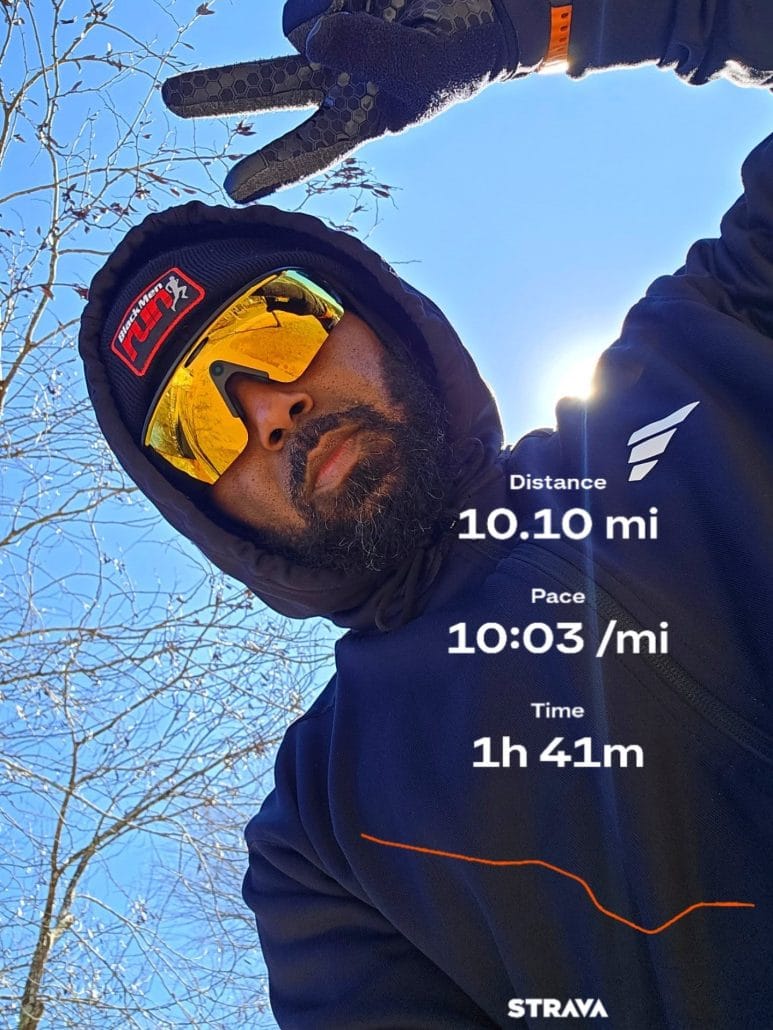
New challenges keep me motivated. My run community keeps me motivated—the SQUAD.
7. What has running taught you about yourself?
I’ve learned that I can do hard things.
8. Are there any specific workouts or drills you find particularly effective?
I’ve learned to stay consistent with weight training to help avoid injuries. Other than that, my drill is simple: left foot, right foot, repeat.
9. How did you find Black Men Run?
I’ve known about BMR for years. When I first started running, I would see the group out regularly around the time it was formed. I tend to do most things solo due to social anxiety, but in the last couple of years, I’ve explored more of what Atlanta’s running community has to offer. I attended my first Monday night run in February 2025 and have been a part of the group ever since.
10. Best part about being a member of BMR?
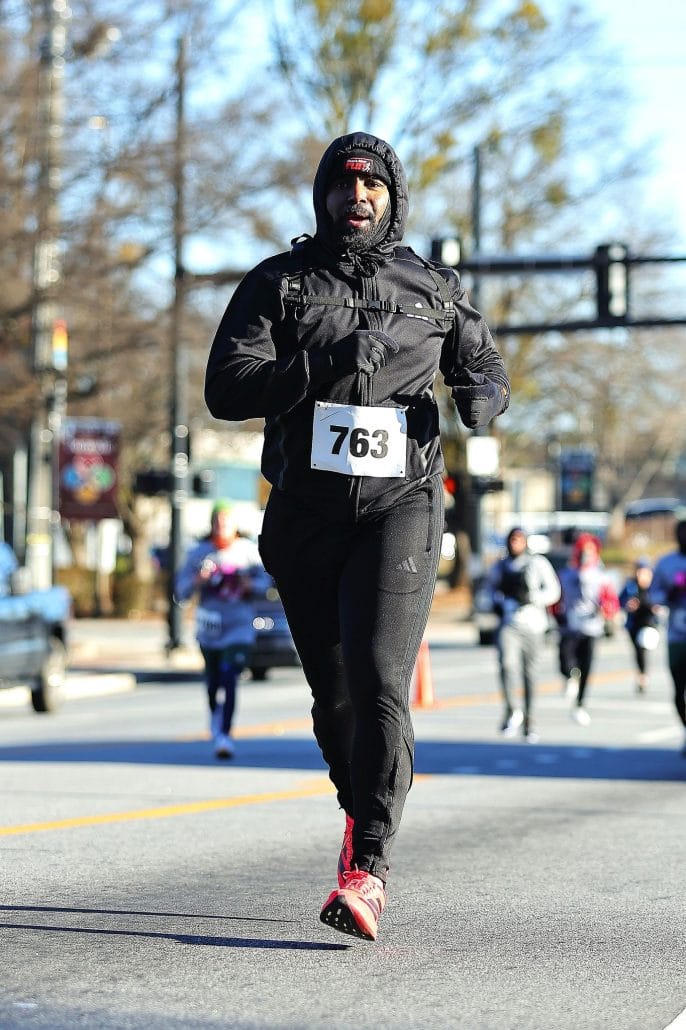
The camaraderie with like-minded individuals. Iron sharpens iron. We’re all pushing each other to be better versions of ourselves and building lasting, meaningful friendships. I look forward to the laughs, the jokes, the hard runs, and the next race.
11. Do you have a specific role within BMR?
2026 Ambassador – BMR Atlanta
Social Media Team – BMR Atlanta
But mainly: SHOW UP AND RUN
I started running in my sophomore year of college and completed my first half-marathon in 2021 without formal training. Most of my runs were done alone, and when I first began running, I often felt like an outcast. It took a long time before I saw another runner who looked like me. Research shows that only about 1.6% of marathon runners in America are African American, compared to 90% Caucasian and 5.1% Hispanic. My generation needs visibility and often changes require people willing to put boots on the ground in spaces. I am also a person who stutters, which means I experience long speech blocks and prolongations, which can be draining. Because of this, I relied heavily on basketball as my outlet at a young age. Once I got to college and began focusing more on speech communication and being more open about my stutter towards others, I needed something that would challenge me and would be beneficial for my mental health. That’s when I found running through my love and appreciation for the outdoors, especially on the University of Oklahoma’s beautiful campus. Living in Norman as a full-time student gave me easy access to smooth pavements and consistent routes to track my miles.
Oklahoma, Oklahoma City – Memorial Half Marathon 2021
During my time in college, I became involved with the National Stuttering Association and served as a chapter leader in my junior year, which kept me constantly on campus from morning to night. I began to ask myself, “What is the purpose of why I am running?” Stuttering is something that people need to be more aware of—and what better way to create awareness than by running races surrounded by thousands of people? I was inspired by well-known Black runners like Tommie Runz and organizations such as WERUN313 out in Detroit, seeing the impact and energy they bring to the long-distance running community. I did not grow up running across country or competing in track and field. I come from a basketball background, and for much of my life, running was viewed as a punishment in sports. I got the courage to do my first full marathon in 2022. It was one of my proudest moments because I knew I was built for this. I just needed a solid group of runners around me who were consistent in training. I took some time off training for full marathon races due to my studies being more demanding.
I dedicate my races to people who stutter because when I look at them, I see myself. I want them to feel encouraged and seen. As I became more serious about running and grew into a true fan of long-distance racing, I met more people who loved running just like I did. Over time, I developed meaningful connections. Each time I met people in the running community, it felt like I was carrying the torch—representing something bigger than just myself. Fast forward to moving back to Arizona in 2025, and I was able to find a consistent group of runners who looked like me through Black Men Run PHX. I may not be able to be at every run, the host, but it’s really encouraging to know they are out their running daily. I also came across a run club called Amino Run Club, which is based in the heart of Phoenix. Being centrally located made it much easier to access a community of runners who share similar experiences and goals as me. For the first time, I truly felt a sense of belonging in the running space—both as a Black runner and as a person who stutters
. 
Tucson, Arizona – Inaugural Garmin Marathon 2025